CRM Systems: Using Automation to Improve Corporate Processes
Efficiency and customer satisfaction are very important in the competitive corporate world of today. Companies are always looking for creative approaches to simplify processes, improve client connections, and generate expansion. Emerging as a potent answer, Customer Relationship Management (CRM) systems are radically changing how companies engage with their consumers.
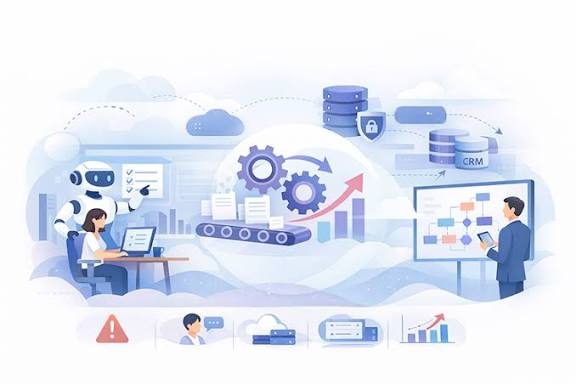
At the heart of this change is automation, a crucial component of contemporary CRM systems that lets businesses manage routine activities, customize consumer experiences, and learn more about their clientele. This article will look at how CRM systems, with their automation features, are changing company processes from marketing and sales to customer support.
Automation in Customer Relationship Management
CRM systems free up important employee time and resources by automating a broad range of corporate operations. Automation in sales can manage appointment scheduling, email follow-ups, and lead scoring. This helps sales people to concentrate on developing connections and sealing agreements instead of becoming mired in paperwork.
For example, a CRM can automatically assign leads to the right sales team member according to predetermined standards to guarantee prompt follow-up and raise the chance of conversion.
Personalized campaigns at scale are made possible by marketing automation inside CRM systems. Businesses can use customer preferences and behavior to divide their customer base and send focused emails, social media updates, or SMS messages. This personalization not only raises engagement but also helps consumers to have a closer relationship with the company.
Streamlining Sales Process
Managing a complicated pipeline and properly nurturing leads is sometimes a difficulty for sales teams. This head-on is addressed by CRM automation. One excellent instance is lead management. A CRM can automatically record a new lead, assign a score depending on its potential, and start a predetermined series of outreach actions. This guarantees that nothing is missed and that communication is always timely and pertinent.
Moreover, much more is improved in deal tracking and pipeline management. CRMs give sales managers a single perspective of all open opportunities so they can track development, spot bottlenecks, and more precisely project income. Automated reminders for follow-ups and task management help to guarantee a constant sales process and so avoid lost chances.
Strong automation tools provided by companies like Salesforce and HubSpot have helped many companies increase their sales cycles and raise income. A little e-commerce company could, for instance, utilize its CRM to automatically send a follow-up email with a discount code to consumers who left their shopping carts—a basic but powerful automation that increases sales.
Improving Marketing Strategies
CRM automation also has a big influence on marketing divisions. Gone are the days of basic, widespread advertising. Hyper-personalization made possible by CRM lets marketers customize their messages for certain consumer groups or even single consumers. This is accomplished by means of automated marketing processes that, depending on customer activities—such as website views, content downloads, or past purchases—trigger contacts.
Classic application of email marketing is a classic one. Based on consumer information, a CRM may automatically distribute welcome emails, birthday greetings, or promotional deals. CRMs can even interact with social media channels to help with automated posting schedules or engagement monitoring.
By raising engagement, enhancing lead quality, and building client loyalty, this degree of automated, tailored outreach greatly enhances marketing ROI. Businesses may therefore shift from a broadcast approach to one more conversational and pertinent.
Improving Customer Service and Support
Another area where CRM automation really shows is customer service. Automated ticketing systems may direct customer questions to the most suitable support agent, therefore guaranteeing quicker response times. AI-powered chatbots can answer often asked inquiries right away 24/7, freeing up human agents to tackle more difficult problems. Additionally, CRMs can help any support agent access a thorough history by automatically recording client contacts.
Since agents can swiftly grasp a client’s past contacts and problems, this enables more targeted and educated customer care. For example, the CRM can instantly access a client’s profile, most recent purchases, and past support inquiries when they call support, therefore empowering the agent to offer more sensitive and effective support. This not only raises customer happiness but also helps support teams with their load.
The Last Words
Driven by automation, CRM systems are now essential to the operational fabric of contemporary companies rather than only instruments for handling consumer data. CRMs increase efficiency, lower expenses, and improve the general customer experience by automating recurrent chores in sales, marketing, and customer service.
Personalizing contacts at scale, automating processes, and deriving useful insights from consumer data offer a major competitive edge. As technology advances, CRM platforms’ automation features will only get more complex, confirming their criticality as tools for pushing corporate performance and building enduring customer relationships.