How Modern EHS Software Improves Incident Reporting and Regulatory Compliance
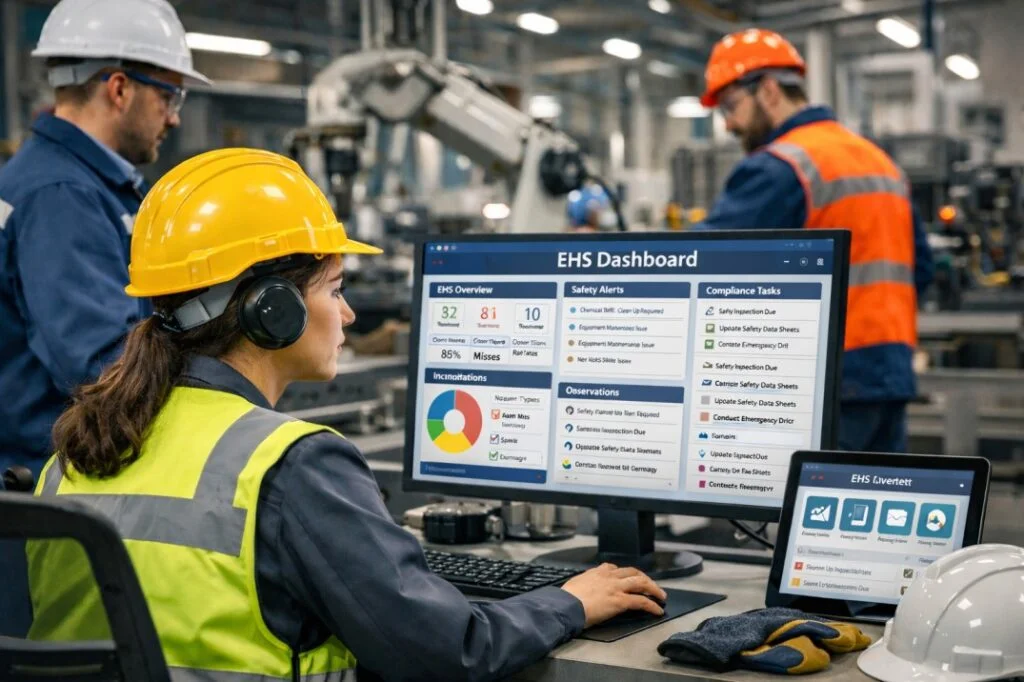
If an incident occurs on a high-hazard worksite, the clock is started at the time of the incident. People to care for, a scene to secure, a regulator that may need to be notified, and a record that may be called into question weeks, months, or even years later.
The first hours of any incident and the investigation of the same often depend on the systems in place. Paper documents or email chains simply weren’t designed for such stress. Modern EHS software is, and it’s changing the way companies in the mining, construction, oil and gas, transportation, and manufacturing industries record incidents and remain compliant.
This article is intended for safety managers, operations managers, compliance officers, and training coordinators in Canada. It details how the correct platform can enhance incident reporting and regulatory compliance, what to search for when considering a platform, and why work-specific software is better suited to handling high-risk work than generic software.
What Is EHS Software?
EHS software refers to a digital platform that provides a unified solution for managing Environment, Health, and Safety (EHS). For incident management, it’s able to record events as they occur, organize the incident investigation, monitor corrective actions to closure, and document the evidence regulators seek. Occupational health and safety software makes incident reporting a paperless process that also drives compliance and prevention.
Key Challenges Facing High-Risk Industries
From a structural point of view, incident reporting and compliance are more difficult in heavy industries than in most industries, the reasons being:
- Underreporting and delay. Near misses and minor incidents are not recorded when reported in an office, completing a form. Those are the top indicators that lead to serious events.
- Non-stop regulatory deadlines. In most Canadian jurisdictions, employers are obliged to report serious injuries and fatalities to the regulator within specific deadlines, and federally regulated operations are subject to the Canada Labour Code. Violation is a violation regardless of if it was a missed notification.
- Jurisdictional variation. A business with operations in two or more provinces has to comply with a variety of occupational health and safety reporting requirements in each province, in addition to compliance with WHMIS 2015 and, in the case of transportation and oil and gas, requirements under the Transportation of Dangerous Goods.
- Contractor accidents often get overlooked. Incidents with non-employees can be easily overlooked on construction sites where there are many contractors, and have the same regulatory and reputational consequences.
- Any evidence that needs to stand up. The Westray amendments to the Criminal Code mean that organizations and individuals can be held criminally liable for failures to keep people safe. A due diligence defence relies on fully documented, stamped, and tamper-resistant records, which are hard to achieve with manual systems.
These pressures are what a digital safety management platform is created to manage.
Why EHS Software Is Essential for Modern Safety Management
A modern system isn’t only useful when an incident is reported; it’s useful throughout the entire incident lifecycle.
It records what happens in events as they occur. Nobody is injured in a near-miss incident, a worker records the incident on a phone at the worksite, attaches a picture, and submits it before the end of the shift, even if they are not online. There is no time for a desk.
It standardizes investigation. The platform has structured root cause analysis processes instead of inconsistent write-ups, and investigations are carried out thoroughly and comparably between sites.
It closes the loop. Corrective Actions are assigned, scheduled, and monitored for completion and do not get “stuck”. An open action is seen and not lost.
It creates proof of compliance. Compliance management software generates the incident record, investigation, corrective actions, and connected training in minutes when there is a request by the regulator/auditor. That is the day-to-day implementation of due diligence and one of the top drivers for high-risk organisations to use these systems.
Features to Look for in EHS Software
If you’re considering EHS software for high-risk industries, look for features that enhance reporting and compliance.
Incident and Investigation Capabilities
- Offline incident capture was made mobile, so that events are logged at the source on remote sites.
- Consistent structured investigation and root cause analysis processes.
- Corrective and preventative action tracking with assignments and due dates, plus auto-generated reminders.
- Customizable notifications that warn the proper parties and meet regulatory notification deadlines?
Compliance and Records Capabilities
- Defensible audit trail with audit-ready, time-stamped records.
- Regulatory alignment to Canadian OHS requirements, COR audit standards, and jurisdiction-specific reporting.
- Document and training links that relate an incident to the worker’s certifications and procedures.
Visibility Capabilities
- Dashboards and analytics that bring together leading and lagging indicators, trends, and pending actions at the site level.
A modern platform should be able to handle all aspects of the incident lifecycle:
Incident Stage
What Strong Software Does
Capture
Mobile, offline reporting at the source with photos and details
Triage and notification
Leveraged timely and efficient connections with appropriate parties and kept regulatory reporting deadlines current
Investigation
Root cause analysis using an agreed template with a structured approach.
Corrective action
Distributes, plans, and monitors activities for closure
Closure and analysis
Centralizes records and provides a feed to trend dashboards for prevention
How BIS Safety Software Supports High-Risk Industries
BIS Safety Software is not a modification of a business program; it is designed for the needs of heavy industry. It supports over 1,600 organizations and integrates EHS management software with a comprehensive learning management system, making incident logs and training logs part of the same system.
That design enhances reporting and compliance in the mining, construction, oil and gas, transportation, and manufacturing sectors:
- Industry-specific functionality. Incident and inspection workflows mirror real-world offline mobile forms, reliable reporting data on remote mine sites, and pipeline corridors.
- Digital safety documentation. Incidents, investigations, inspections, and corrective actions are recorded and consolidated digitally, eliminating paper trails and spread files.
- Regulatory compliance support. Records are consistent with the requirements of Canadian OHS and the COR audit requirements, and are made upon request when requested by a regulator.
- Workforce training management. A built-in LMS connects incidents with worker certifications, schedules follow-up training, and sends out reminders prior to when certifications expire.
- Contractor management. Prequalification and document verification make it easy to see contractor compliance—no contractor incidents are blind spots.
- Reporting and analytics. Dashboards provide safety and operations managers with real-time trends of incidents, to-do lists, and leading indicators.
- Ease of implementation and scalability. It is deployed in complex, multi-site enterprises and expands to large distributed workforces.
BIS also has AI-powered tools, such as the AI Form Assistant and the AI Course Builder, to support teams in creating incident forms and follow-up training in less time. The goal is always the same: Reduce administrative burden, increase accountability, and gain transparency on risk.
Benefits of Choosing Industry-Specific Safety Software
A tool that’s built for a high-risk task is better than a generic one that’s been adapted for that task, and it benefits the entire safety program:
- Enhanced safety compliance by streamlining workflows from a Canadian OHS and reporting perspective.
- Less paperwork due to automation of manual entry and report preparation.
- User-friendly training and certification are directly linked to incident follow-up.
- Digital sign-offs and time-stamped records for greater accountability of the workforce.
- Better audit readiness, including full incident and compliance history available anytime.
- A single source of safety information instead of having to search through multiple files at various locations.
- Faster reporting and fewer stalled actions improve operational efficiency.
- Proximity and trended corrective actions minimize risks of recurrence.
An incident form can be stored on a generic platform. A prevention system designed for high-hazard industries becomes a learning moment as a result of each event.
Common Mistakes Companies Make When Selecting EHS Software
Even veteran teams make avoidable mistakes when selecting a system for reporting and compliance. Watch for these:
- Seeing reporting as a form rather than a process. A digital form that doesn’t stimulate investigation and correction will just be a digital copy of the paper.
- Ignoring offline capture. However, with the requirement for connectivity to report, this means that incidents taking place in remote locations are not recorded.
- Regulatory reporting support (overlook). Any platform that is unable to assist you in meeting notification deadlines leaves a compliance gap.
- Selecting someone who has a generic platform. General business tools may be missing Canadian regulatory alignment, contracting, and root cause workflows.
- Skipping analytics. If there is no trend reporting, you are gathering incidents without gaining any information about them.
- Underestimating adoption. Underreporting is the reverse of the desired objective of software that the field will not use.
The bottom line is that the best EHS software is not only used to record incidents, but it’s also used to investigate them, comply with them, and prevent them.
Conclusion
A safety program will be provided via incident reporting, and where the regulatory exposure is greatest. Manual systems are prone to data loss, time sensitive, and cannot withstand an audit. Today’s EHS software systems record events at the source, lead to consistent investigations, manage corrective actions to closure, and create the defensible records that regulators in Canada expect. The outcome is reduced blind spots, speedy compliance, and a program that learns from each event.
BIS Safety Software combines incident management, compliance, and workforce training in a single platform designed to meet the needs of high-hazard environments in the mining, construction, oil and gas, transportation, and manufacturing sectors in Canada. For more information on strengthening your Incident Reporting and Regulatory compliance, please schedule a demo of BIS Safety Software to learn how it will fit your operation.
Frequently Asked Questions
What are the advantages of current safety software for incident reporting?
It allows employees to document incidents and near misses right at the point of occurrence, including without an Internet connection, and directs each incident for a structured investigation and monitors the corrective actions to ensure they are completed. This minimizes underreporting, accelerates response time, and brings the information together for compliance and trending purposes.
What is the role of safety management software in Canada’s regulatory compliance?
It maintains complete, time-stamped records of incidents, inspections, training, and corrective actions, and helps teams meet jurisdiction-specific notification timelines under provincial OHS legislation and the Canada Labour Code. When a regulator or auditor requests evidence, the system produces it quickly, which supports a due diligence defence and simplifies COR audits.
What are high-risk industries looking for in incident reporting software?
Offline mobile capture, structured root cause investigation, corrective action tracking, audit-ready records, and analytics that surface leading indicators are key areas of focus. While both can be significant compliance risks, often, tracking contractors’ incidents and aligning with Canadian regulatory requirements are the differentiating factors.